By Jacie Sellars, Print Editor-in-Chief
When we open up the news, it’s easy to feel saddened and discouraged by current political events, especially regarding immigration.
From the violence displayed by ICE officers to the stories from detainment centers like the CECOT prison in El Salvador, it seems like a new sense of danger is present in the United States, impacting citizens and non-citizens alike.
As we process this news in a Christian community, one question comes to mind: how should people of faith respond to distress and injustice?
When we look at passages of Scripture like Deuteronomy 10:19 or Matthew 25:40 about loving the foreigner and caring for the least of these, it seems natural for Christians to advocate for oppressed communities and care for those in need.
Yet in an age with an abundance of online opinion, this is not so simple. During my recent scrolls through Instagram, I’ve seen drastically different takes on the ICE violence, with many people choosing to politicize events and cling to party lines.
In a faith where we are called to be “in the world but not of it,” why has it become normal to put partisan loyalty ahead of compassion?
A part of the problem might come from how we interpret spiritual warfare. Christians are encouraged to put on the armor of God in Ephesians 6, and when applied in a healthy way, Christians can use this battle mentality as motivation to endure and continue showing God’s love.
However, when spiritual warfare mixes with political motivations, it can twist itself into something less Christlike.
Instead of focusing on standing strong in the faith and ministering to others, the focus can shift to culture wars against those who don’t share a Christian ideology.
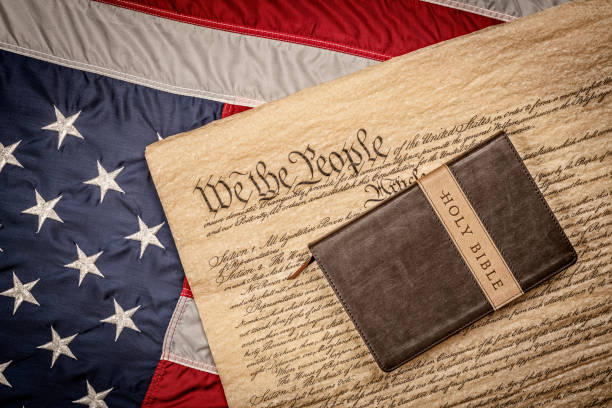
This explains the recent trend of Christian nationalism in the United States. When politicians promise to eradicate anything that appears “secular,” it can feel like a promise of safety, a shelter from a broken world.
While there is certainly nothing wrong with our Christian views informing how we approach politics, expecting an entirely Christian nation often neglects people in favor of politics in several ways.
Firstly, a Christian nation is hard to define. If the United States was a theocracy, what denomination would it take after? How would Christian laws realistically be made with so many different Biblical interpretations? Would we limit gatherings of other religions, casting aside the freedom of belief we value as Americans?
Secondly, adhering to a Christian nationalist viewpoint can cause us to put too much trust in imperfect figures. If we believe that a politician is seeking to make America more godly, it can feel easier to excuse immoral behavior or violent policy choices, seeing these as a means to an end, a necessary casualty in a greater holy war.
Finally, putting political battles over faith changes how we see the people around us.
According to the teachings of Jesus, the unbelievers in our midst, the figures in the opposite political party and the immigrants seeking asylum in our country are all our neighbors. However, politics can present these people as our enemies.
As we recognize these tendencies in our government, we must decide how to respond. So how can Christians stay calm instead of succumbing to political extremes?
We are not called to abandon politics, but we are called to demonstrate patience and gentleness even in times of turbulence.
I don’t claim to be a theologian, but I believe that there are several practices that can encourage political thoughtfulness in a way that glorifies God.
To begin, it’s important to seek truth in the midst of chaos. We cannot love others well or make informed political decisions if we don’t understand what’s happening in our nation.
Examining multiple sources and considering different perspectives can protect us against false teachings or uninformed opinions.
As we seek truth, we will encounter tragedy, and it’s okay to mourn this. Social media posts often try to minimize political violence, and it’s essential that we don’t lose sight of our compassion despite narratives like this.
Christian theology states that every person is an image-bearer of God, and we should strive to treat each person with dignity.
After we have found truth, we can boldly advocate for justice and compassion, letting our Christian values shape our words for the better.
From my perspective after keeping up with recent news, I can recognize that there is nothing Christlike in the recent treatment of immigrants by the government.
Regardless of one’s stance on immigration policy, I do not believe that the God who commands me to love my neighbor would want me to turn a blind eye to frightening violence and inhumane treatment.
In these moments of distress, I have to resist living in the “spirit of fear” described in 2 Timothy 1:7. Politics often thrives on fear, the fear of the unknown and the fear of speaking up.
As I battle this fear, I strive to approach every aspect of my life, including politics, with the perfect love that casts out fear, and to let that love shape my prayers, words and actions.