
By Addison Pierce, Staff Writer
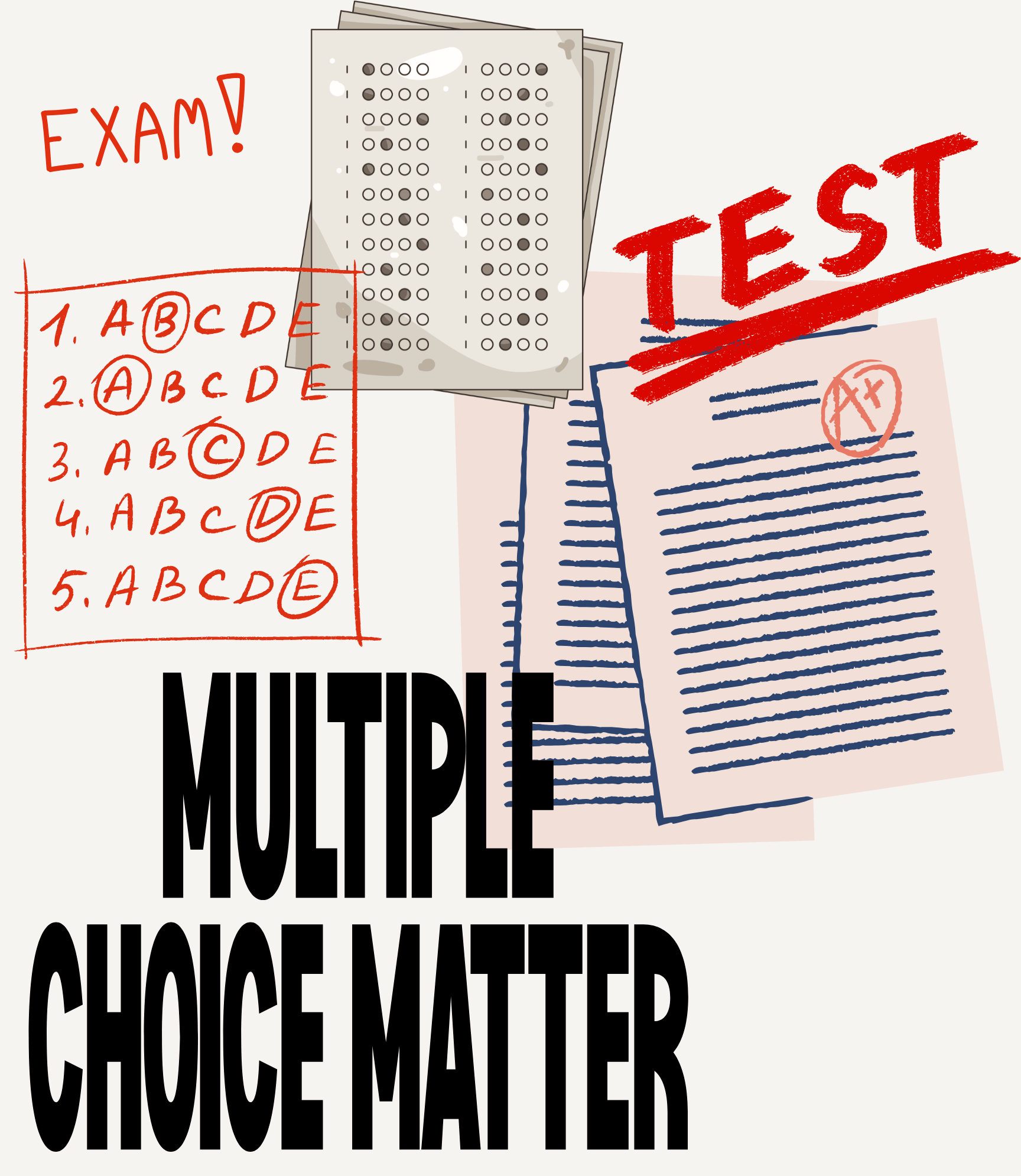
The most dreaded time of year is soon-approaching, and for some it is already here. It is the time that evokes dread into even the bravest of students: Test-taking season. As I sit in the Stu, or wander past the library, I have the familiar view of peers cramming study material for upcoming tests and I cannot help but feel the anxiety settle in my own stomach.
Freshman Maddox Pierce, who takes honors classes and is majoring in Pre-Dental, is no stranger to rigorous tests. “My favorite test-type is multiple-choice because you can use deductive reasoning, and cross out the ones you know are incorrect…I think [multiple-choice] is the best and easiest way to take a test,” Pierce said. Finding himself drained after the amount of tests he has taken thus far helps him narrow which ones work the best for him versus which ones do not. He elaborates on why free-response is the worst type for him. “If you don’t understand [the subject], you are in a really bad spot, because free-response questions are usually worth a lot point-wise. If you don’t know enough, you risk losing all of those points,” Pierce said.
Pierce is not the only one with this opinion. Sophomore Jacinth Reddin, majoring in Civil Engineering, agrees. “I think the easiest test format is probably multiple-choice,” Reddin said. “You can use the process of elimination, and the question isn’t as tricky as a true or false question.” However, in spite of his current stance on the topic, Reddin admits his humorous struggle with multiple-choice type tests in the past. “In my fifth grade science class, I took a test that was open-book and multiple choice, and I made a forty-percent. I think I was just not the brightest, but I’ve gotten better now…hopefully,” Reddin said.
As for me, I find myself torn. I enjoy as well as loathe all types of tests for different reasons. Multiple-choice tests allow for a twenty-five percent chance of getting a random choice correct, however, can also be confusing, especially when the options are all similar with only slight differences. Free-response tests allow me to spell out exactly what I know on the subject, however, if I have not studied very well, it can be a one-way street to a horrible grade. True or false tests offer a fifty percent chance of getting whichever choice correct, however, can be very tricky and offers no room for improvement. Personally, I agree with Pierce and Reddin– I perform best on multiple-choice tests. All in all, each test-type has its pros and cons, with more preferring multiple-choice. However, I think it is safe to say most students’ favorite test type is a blank one.